Why concept frames beat flat sketches
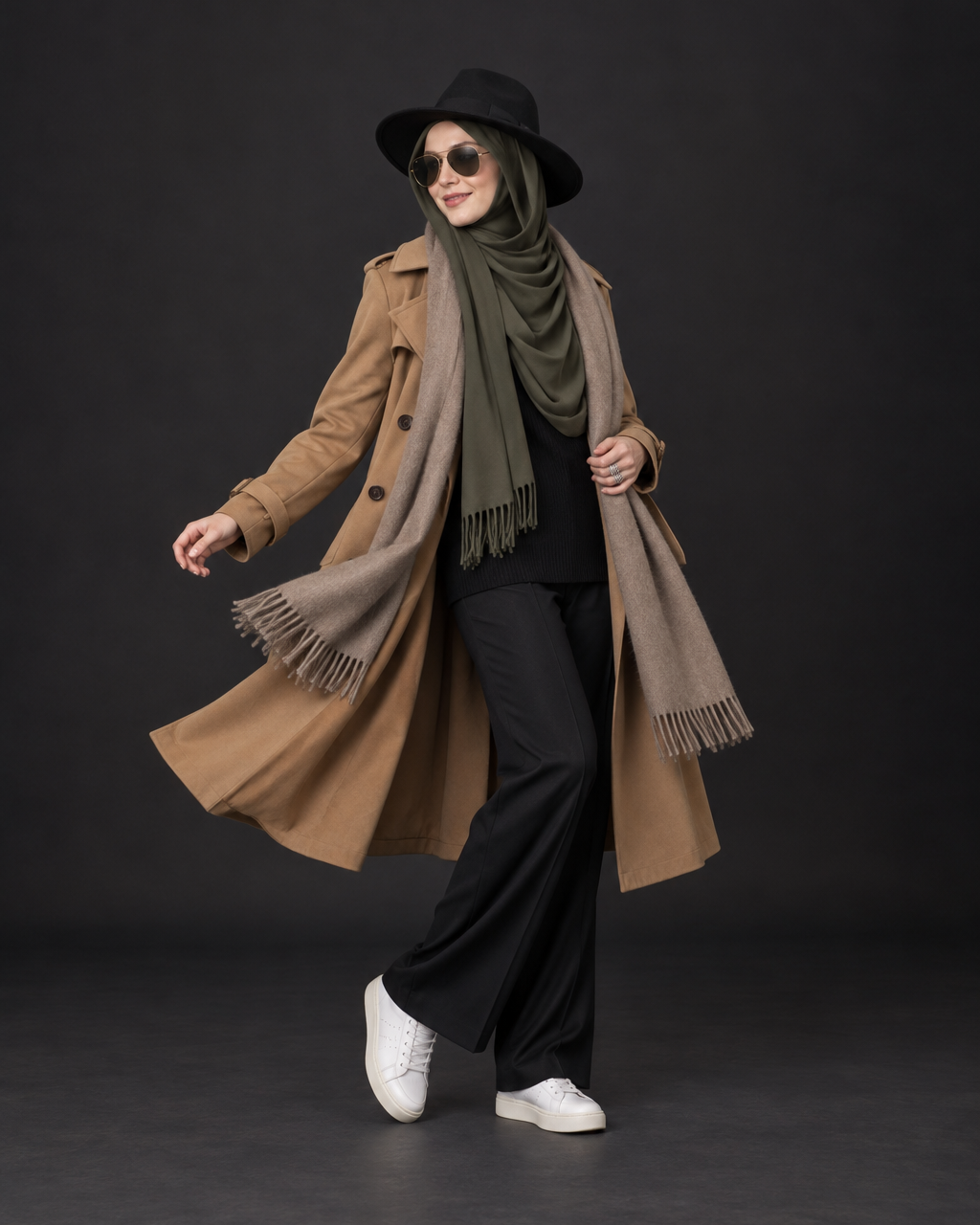
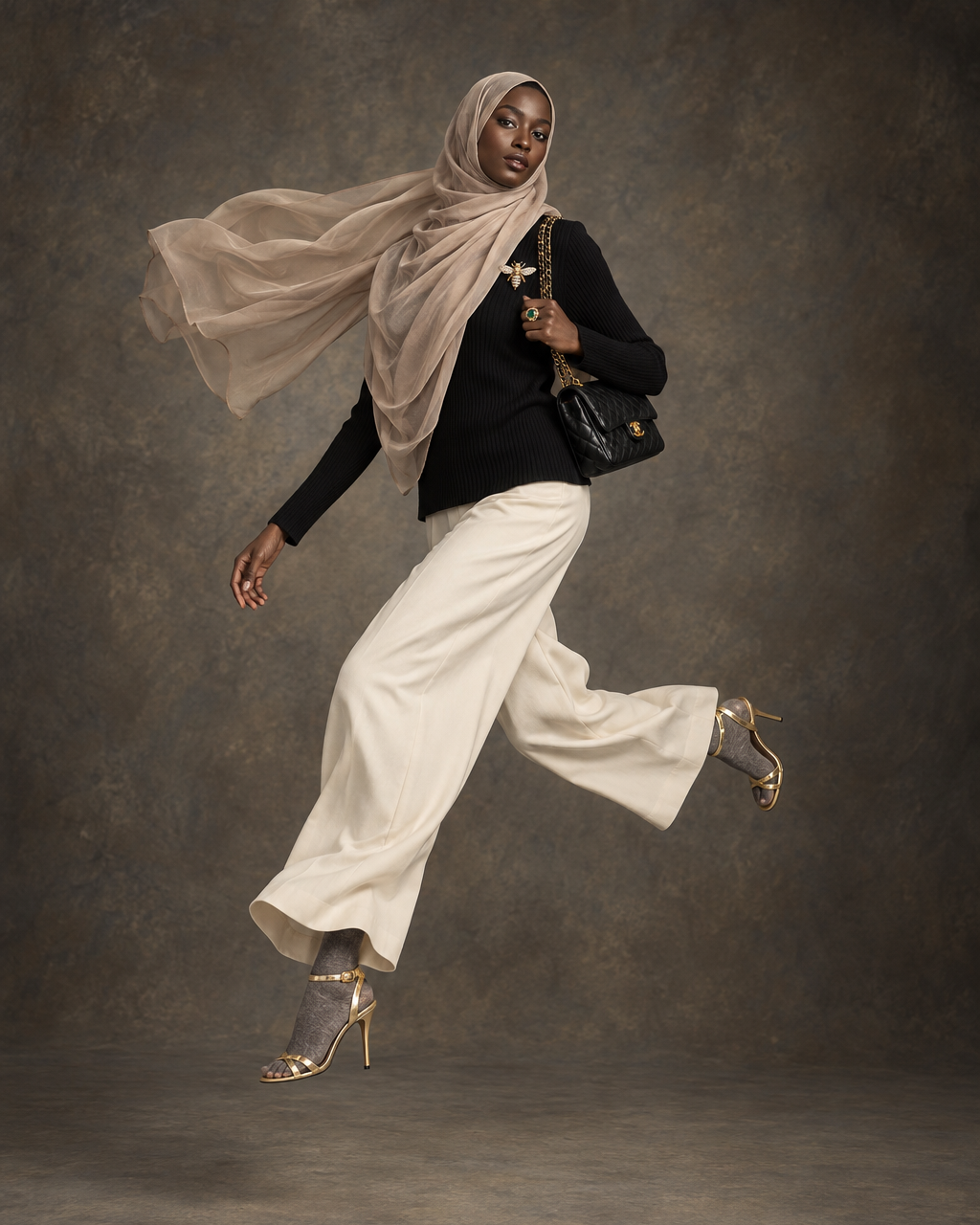
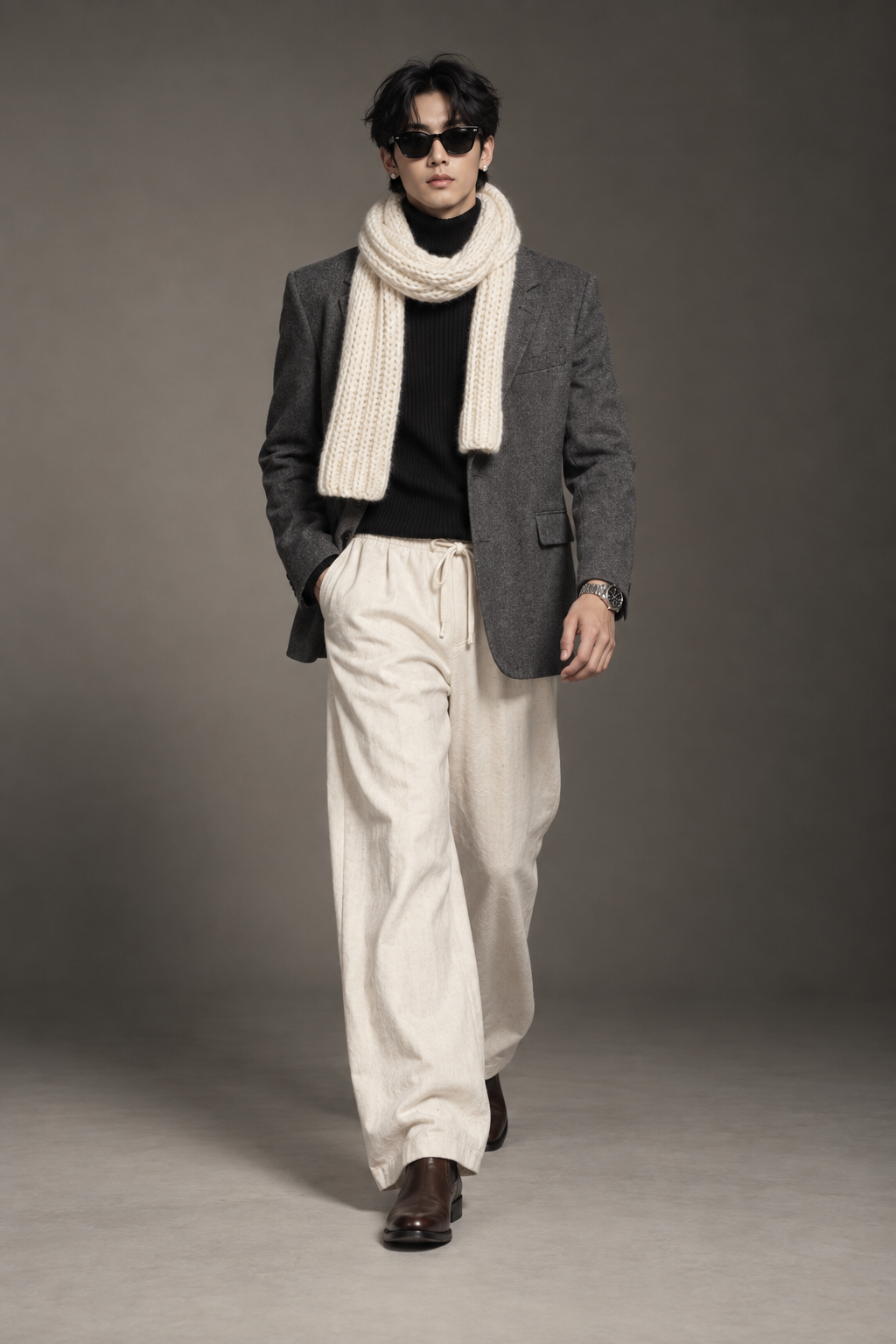
Sketches and flat lays hide the questions buyers and merchandisers actually ask: how does the jacket length sit against wide trousers, does the scarf overpower the collar, does the palette read warm or muddy under light?
A Potoly frame puts the full outfit on a cast model, in a real pose, under controlled lighting. It is a concept image, not a product photo, but it is close enough to start the right conversation.
A quick prototyping routine
Teams that get the most out of Potoly treat each shot as one variable changed at a time.
- Cast one model and keep them fixed across the whole story so changes read clearly.
- Lock a single pose, like Runway walk, to compare silhouettes in motion.
- Swap one wardrobe piece per shot: blazer vs. trench, linen vs. wool.
- Use the color picker to test the same piece in two or three colorways.
- Finish with a dynamic pose to check how the look holds up with movement.
Bring the frames into review
Drop the strongest frames into your line review deck next to sketches and swatches. Because each frame records the model, pose and wardrobe, anyone can recreate or adjust it later.
When a direction is approved, you head into sampling and the real shoot with a much clearer brief.